Cloud AI
Reads everything you give it
Every document, client name and draft contract goes to someone else's servers, under terms they can change. Plenty of firms are not allowed to do that. Not reluctant: not allowed.
Now taking preorders
£250 deposit · fully refundable · nothing charged until it ships
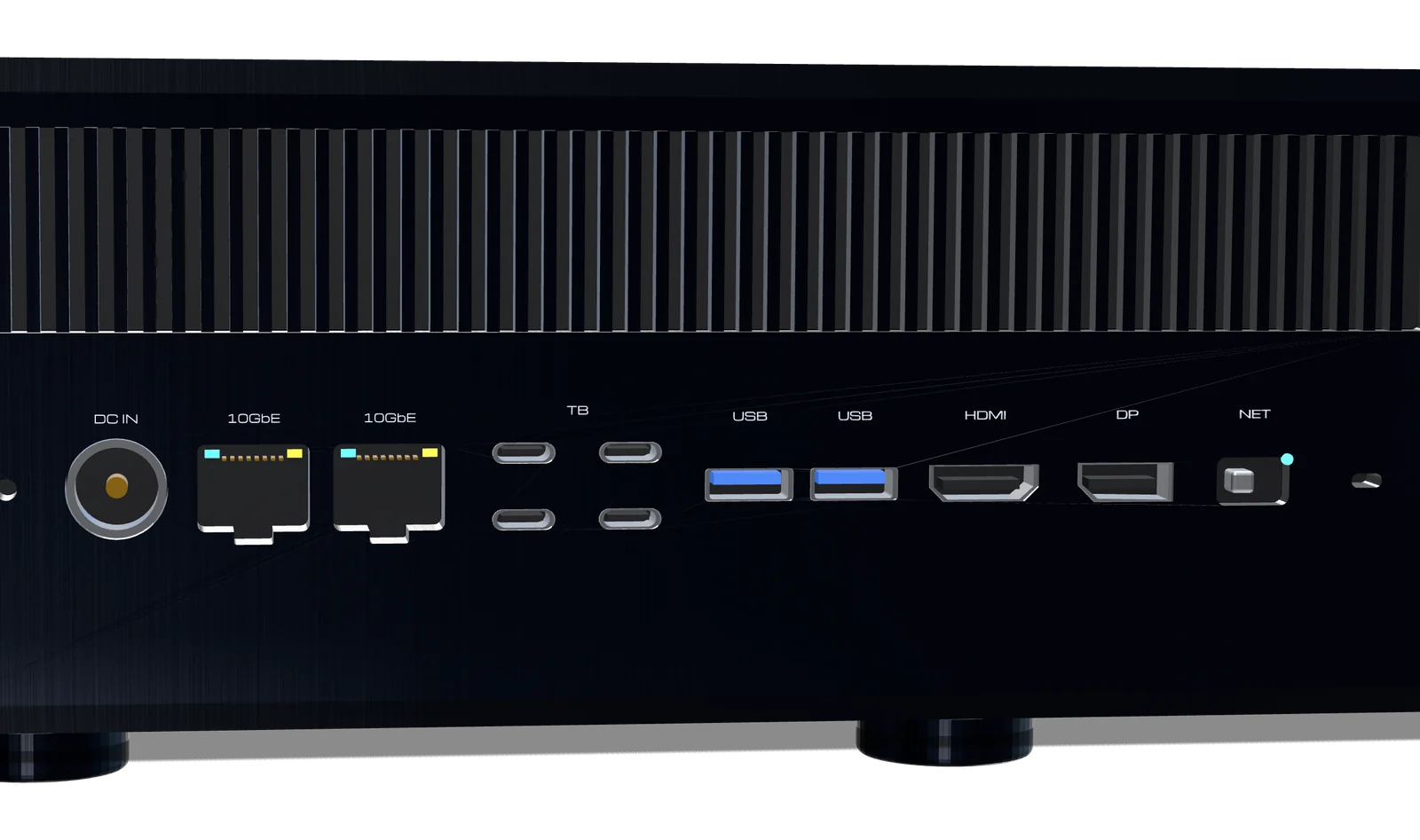
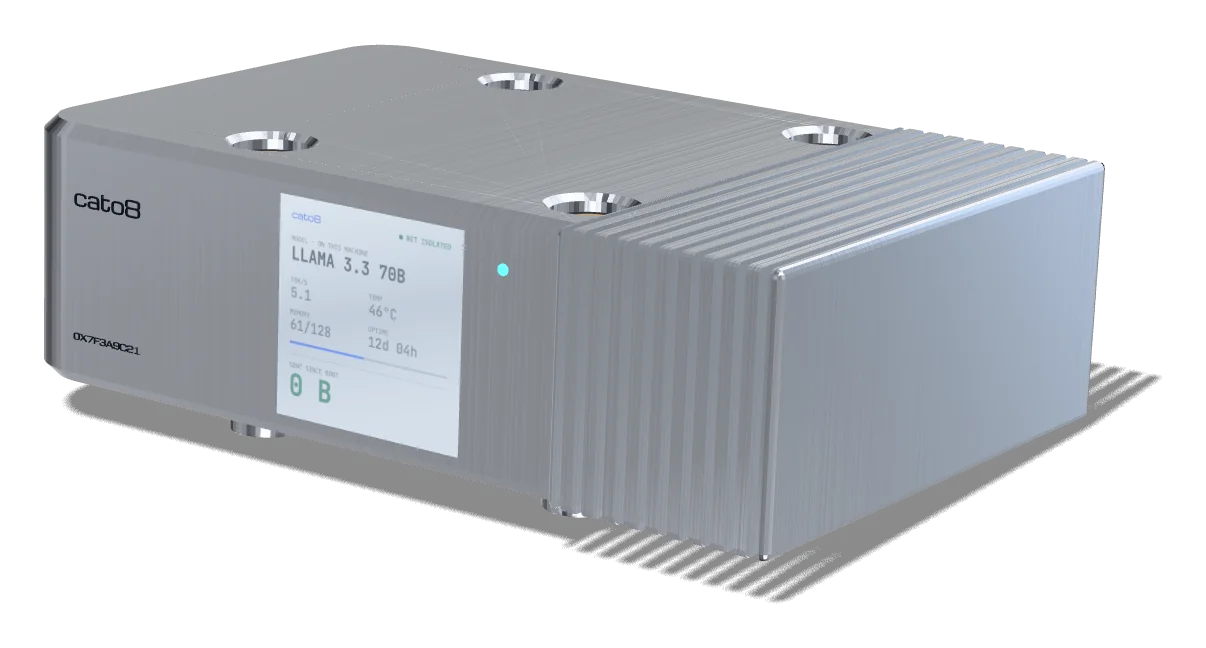
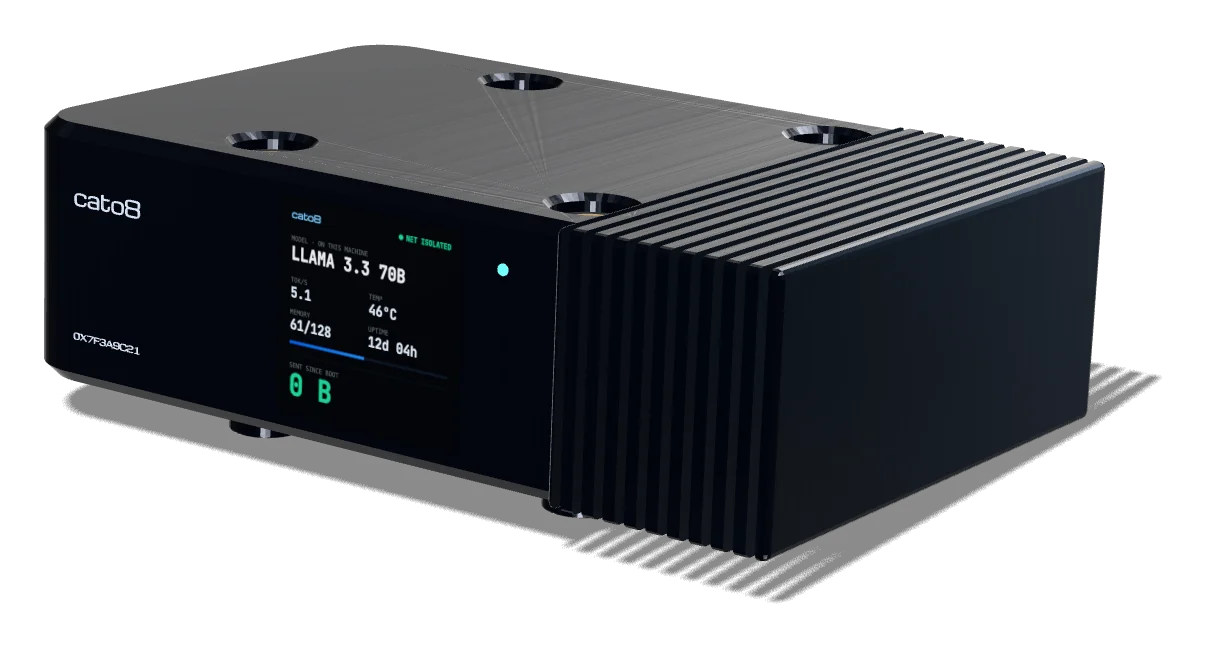
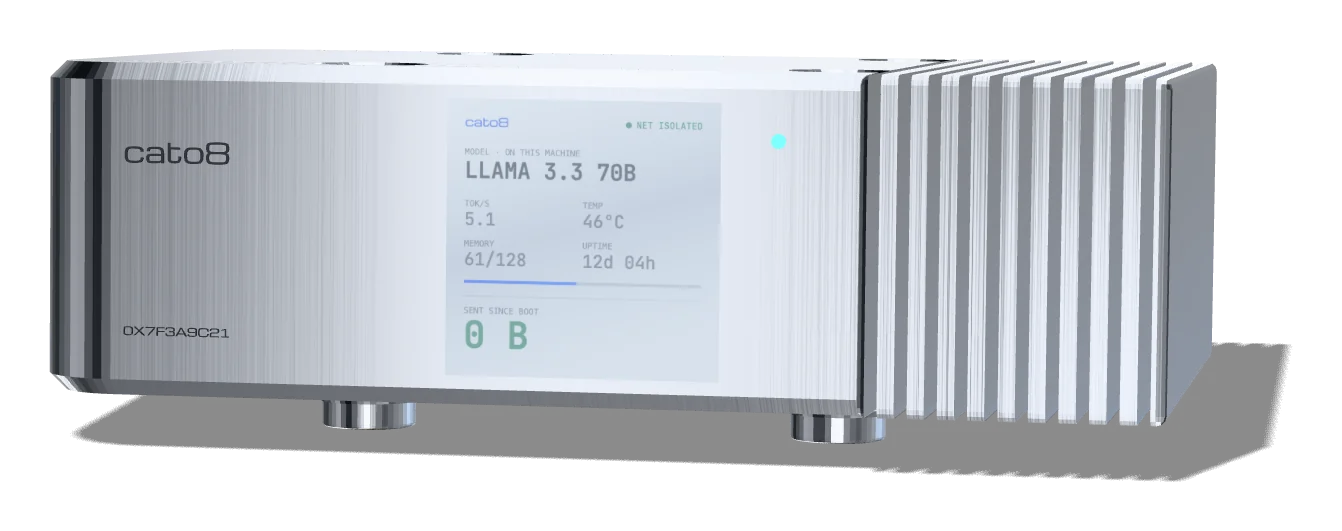
A low, wide satin-aluminium AI computer with a machined fin block at one end, four stacking feet, and a rear panel of Thunderbolt, 10GbE, USB, HDMI and DisplayPort ports beside a physical network isolation switch.
The situation
Most businesses either send private material to a service they do not control, or skip AI altogether. The "local" boxes in between often quietly route the hard questions to the cloud.
Cloud AI
Every document, client name and draft contract goes to someone else's servers, under terms they can change. Plenty of firms are not allowed to do that. Not reluctant: not allowed.
Hybrid "local" boxes
The agent lives on a box in your office, but the thinking is routed to cloud models whenever a task is too big for it. For law, health and finance, "sometimes it goes to the cloud" fails the compliance question outright.
Do it yourself
The open tools are good, and built for engineers: drivers, quantisation formats, inference servers. Most people give up before anything works.
cato8
Up to 128 GB of unified memory holds models to 120B on the device itself, so there is never a reason to send anything out. Flip the NET switch on the back and keep working. That is the only demonstration of privacy that proves anything.
See the full comparison0 GB
unified memory for models
0 B
parameters, run locally
0
outbound requests, by design
0 s
from first boot to first answer
What you're actually buying
Anyone can put fast silicon in a small box. The operating system is the product, built for running models, not for running a desktop.
Weights are on the drive when it ships. First boot to first answer is about ninety seconds: no download, no account.
Swap models, add a pack, connect a folder. No terminal, no config files.
Signed updates and an immutable system partition. An appliance that behaves like one.
No licence check, no telemetry on what you ask, no account required. Turn the network off and it carries on.
In your pocket
The cato8 app talks to your machine directly, over your own network or your own VPN. Other AI boxes route your phone through the maker's relay. Ours has nothing in the middle to route through.
Integrations
Your email, files, calendar and business systems, connected so the machine can read and act on them. The thinking still happens on the machine; the logins never leave it.
A SetupMyAI engineer connects the systems you actually run, then tests them with your team.
Credentials are stored on your hardware and never pass through the model. Revoke any of them in one place.
Connections use MCP and each system’s own API. If it has an API, it can usually be connected.
Your choice of silicon
Business tiers run on NVIDIA Grace Blackwell, for CUDA and the fastest work on long documents. Personal runs on AMD to keep it affordable, and can be specified with NVIDIA. The operating system, models, NET switch and engineer are the same on both.
Standard in Forum, Curia and Senate
The superchip behind DGX Spark. Full CUDA, and about five times faster than AMD at reading long documents.
Standard in Atrium · lower-cost business option
Unified memory shared by CPU and GPU, so a large model loads whole. The most model per pound.
Enterprise · built to order
Workstation GPUs for the fastest generation on models that fit in graphics memory, and multi-GPU racks.
Chip specifications are the manufacturers' published figures. Every option and its price is on the configurator.
Data sovereignty
For a lot of our customers this isn't a privacy preference. Their material is not permitted to leave the building, privileged case files, patient records, unpublished results, work under NDA, anything inside a regulator's perimeter. "The provider says they don't train on it" is not an answer to that. Not sending it at all is.
The models live on the device, so there's no inference call to make and nothing to send. Pull the network cable out of the back and keep working, which is the only demonstration of privacy that actually proves anything.
Outbound requests since boot, 0
Your own local intelligence
cato8 reads your documents, email and notes where they live and keeps its index on its own drive. The more of your work it holds, the more useful its answers get, and every answer shows the document it came from.
Anything on your network can use it, from a browser. Displays, storage and microphones plug straight into the back.
Find your setup
Tell us the job and we'll work out the machine, the models and the setup. No form, no email, no sales call.
01 / 03
Choose as many as apply.
02 / 03
This decides how much memory you need.
03 / 03
Everything runs locally either way, this decides how we set it up.
Your setup
Professional
128 GB unified memory
£2,899
excluding VAT · UK orders add 20% at checkout
Packages
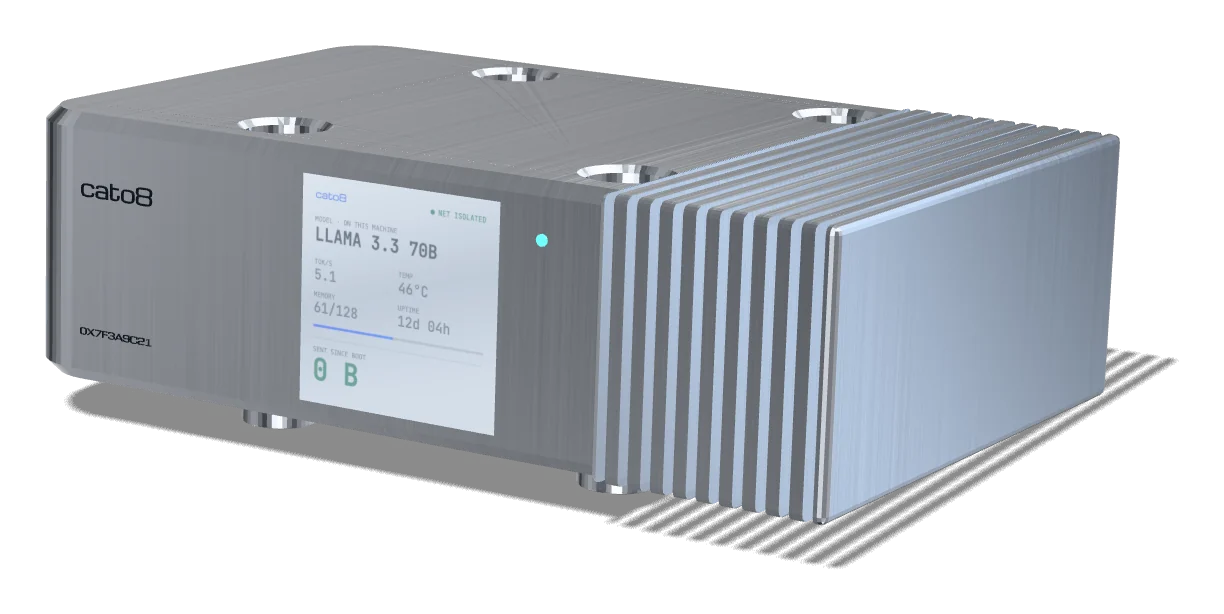
Personal · for one person
A strong private assistant that runs easily, all day, on your desk. NVIDIA available as an upgrade.
£1,500 from, excl. VAT, installation included
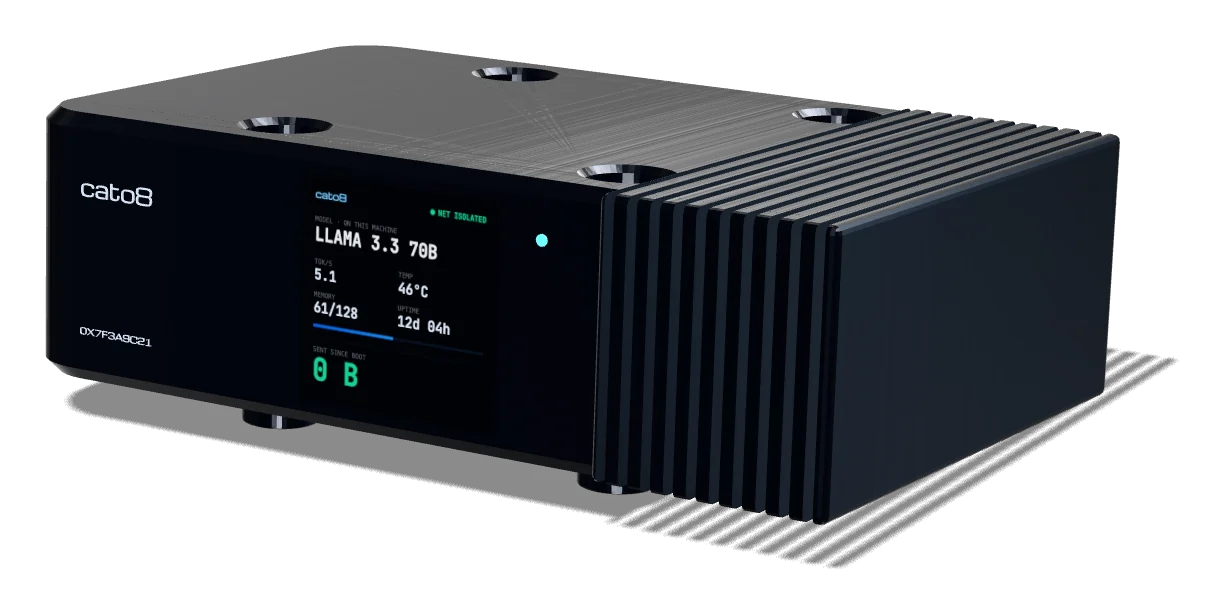
Business · a small team
One NVIDIA machine for a small team: 70B and 120B models, company knowledge, your systems connected.
£4,199 from, excl. VAT, installation included
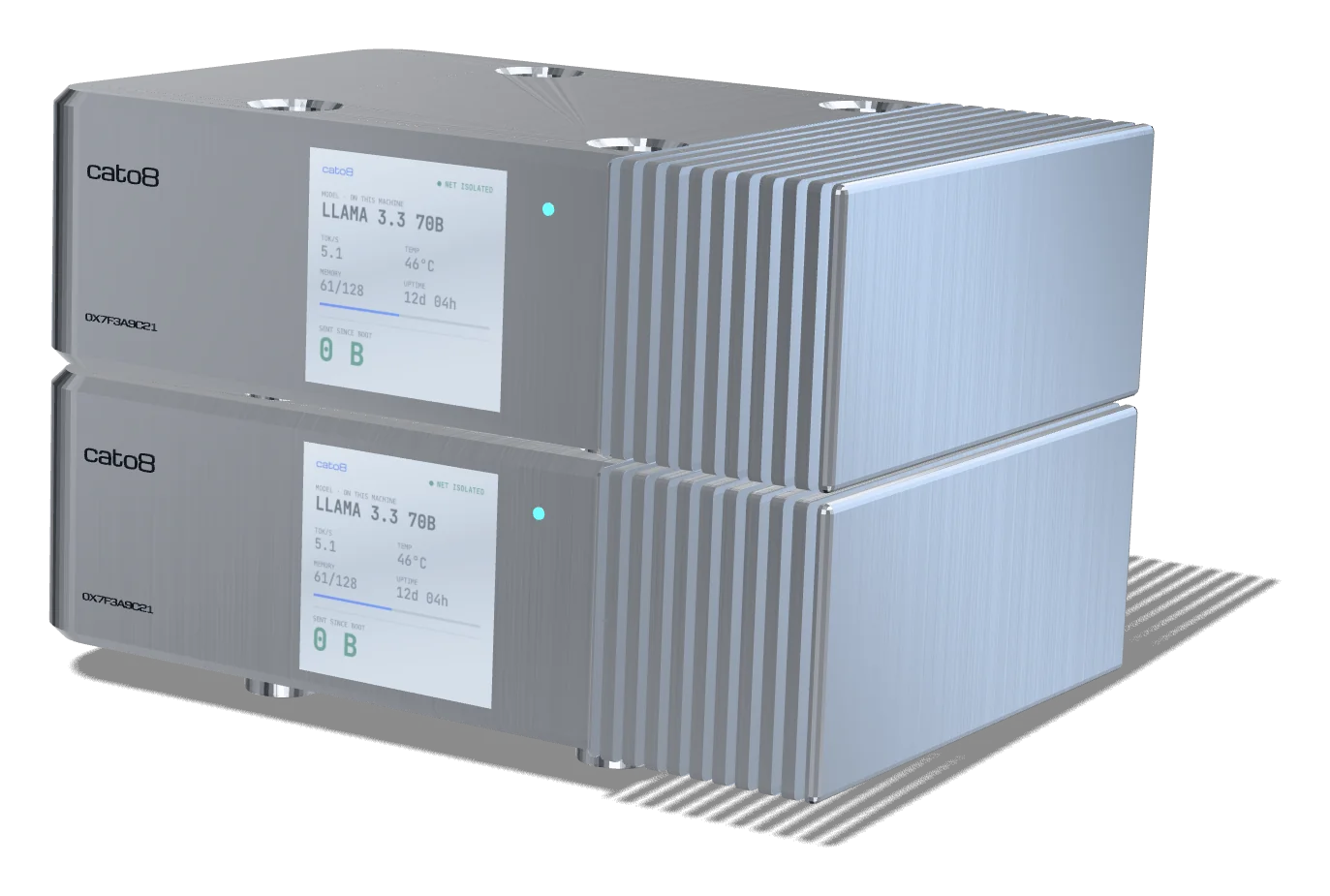
Business · an office
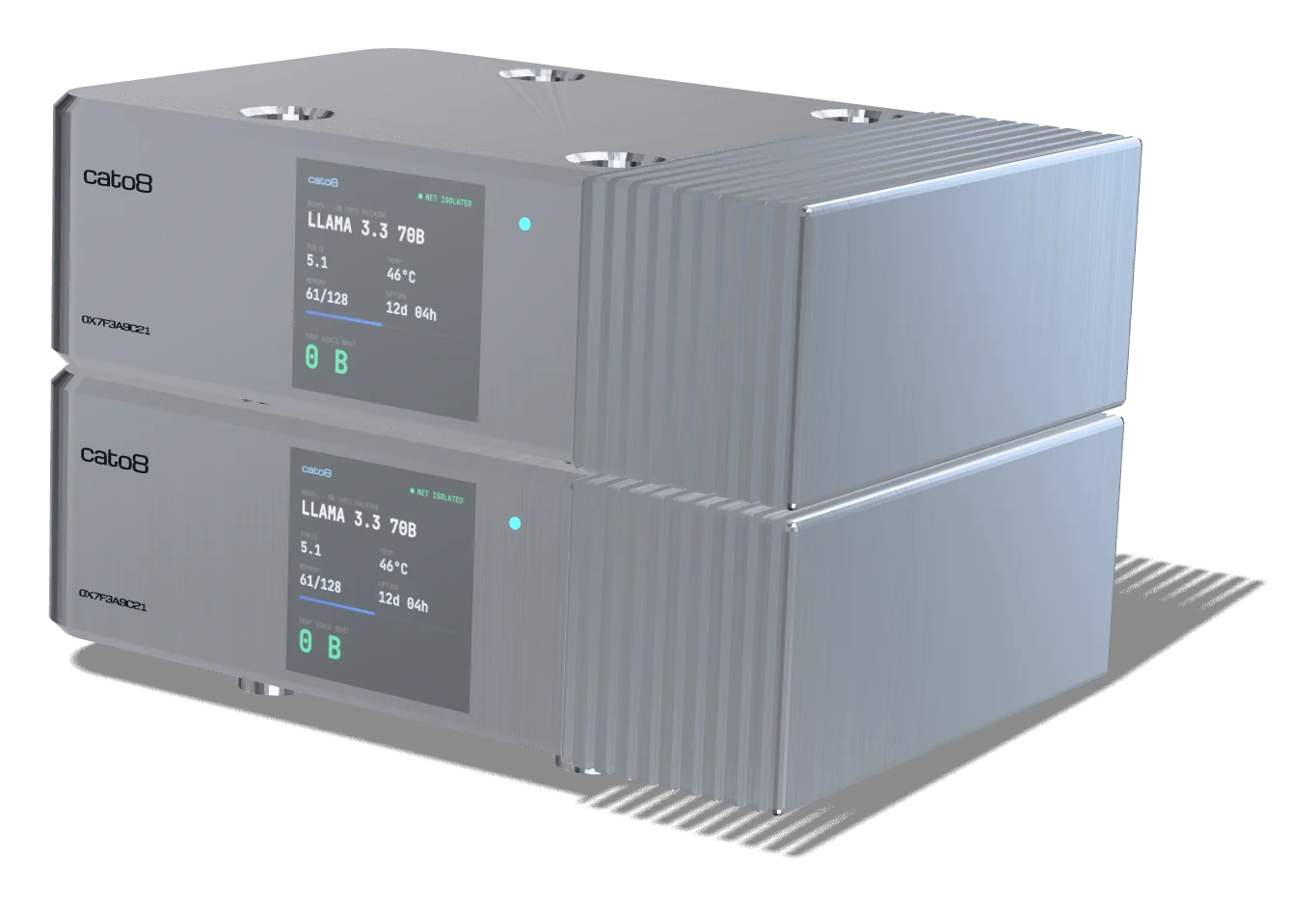
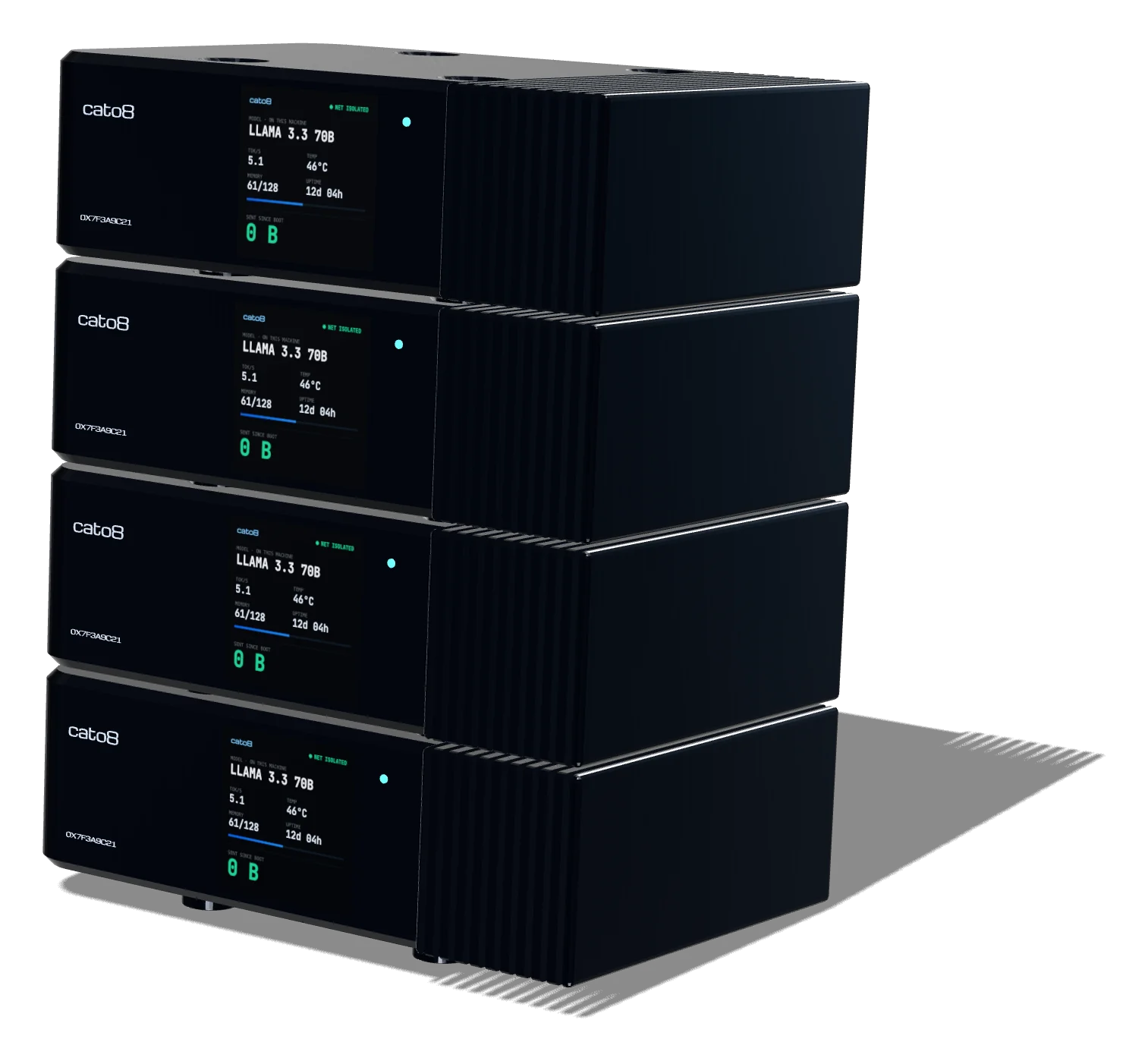
Two NVIDIA machines stacked into one 256 GB pool, or run side by side for twice the people.
£8,398 from, excl. VAT, installation included
Business · a department
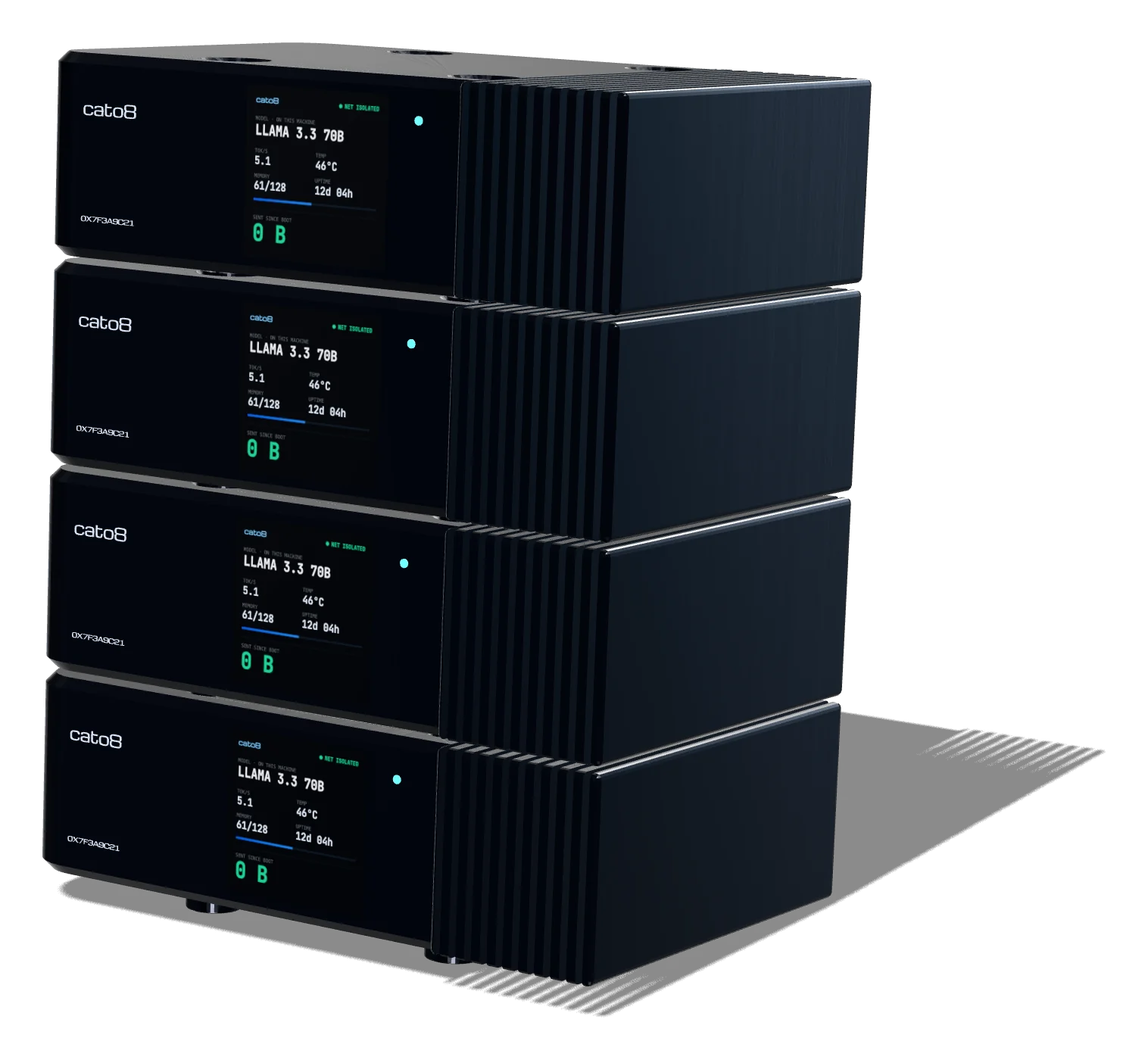
Four NVIDIA machines and 512 GB: the largest open models, or a whole department at full speed.
£16,796 from, excl. VAT, installation included
For an organisation
Frontier-size open models across pooled machines or NVIDIA Blackwell builds, per-user access control, exportable audit logs, air-gapped deployment and a named engineer. Scoped with you, then quoted.
Prices exclude VAT and include installation by a SetupMyAI engineer, on-site across the UK and UAE, remotely everywhere else. UK orders have 20% VAT added at checkout; orders shipped outside the UK are zero-rated and pay the price shown. Business tiers are priced per machine and run on NVIDIA as standard, with AMD as a lower-cost option. You are not buying a box; you are buying a working deployment.
Tech specs
Every package in its standard build, component by component, with the open models it runs and roughly how fast.
Models it runs, 4-bit
Models it runs, 4-bit
Models it runs, 4-bit
Models it runs, 4-bit
Chip figures are NVIDIA's and AMD's published specifications. Speeds are approximate generation rates from the model table below; NVIDIA builds generate at a similar rate and read long prompts about five times faster. Pre-launch: we will publish measured numbers on shipping units. Every option is on the configurator.
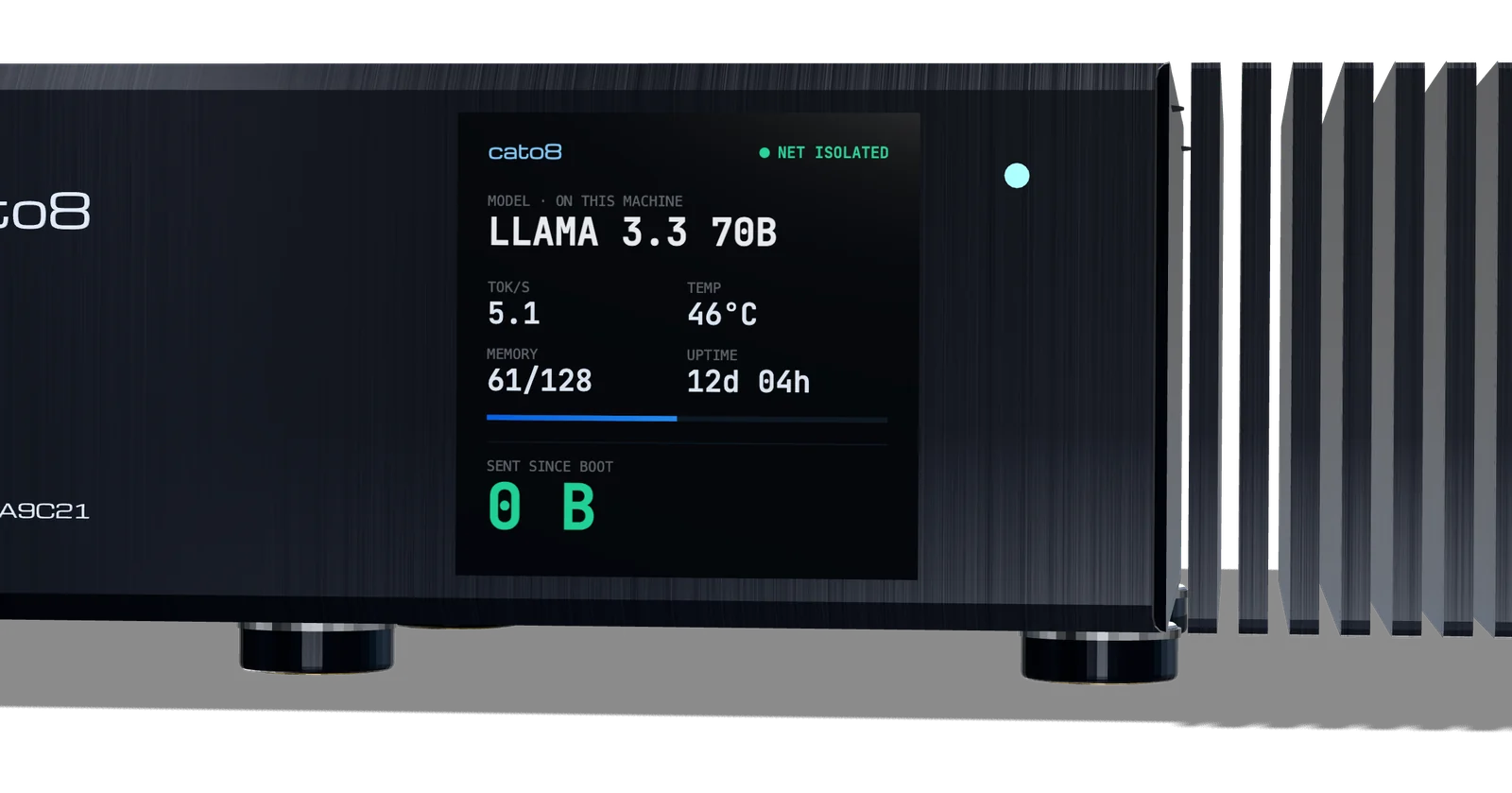
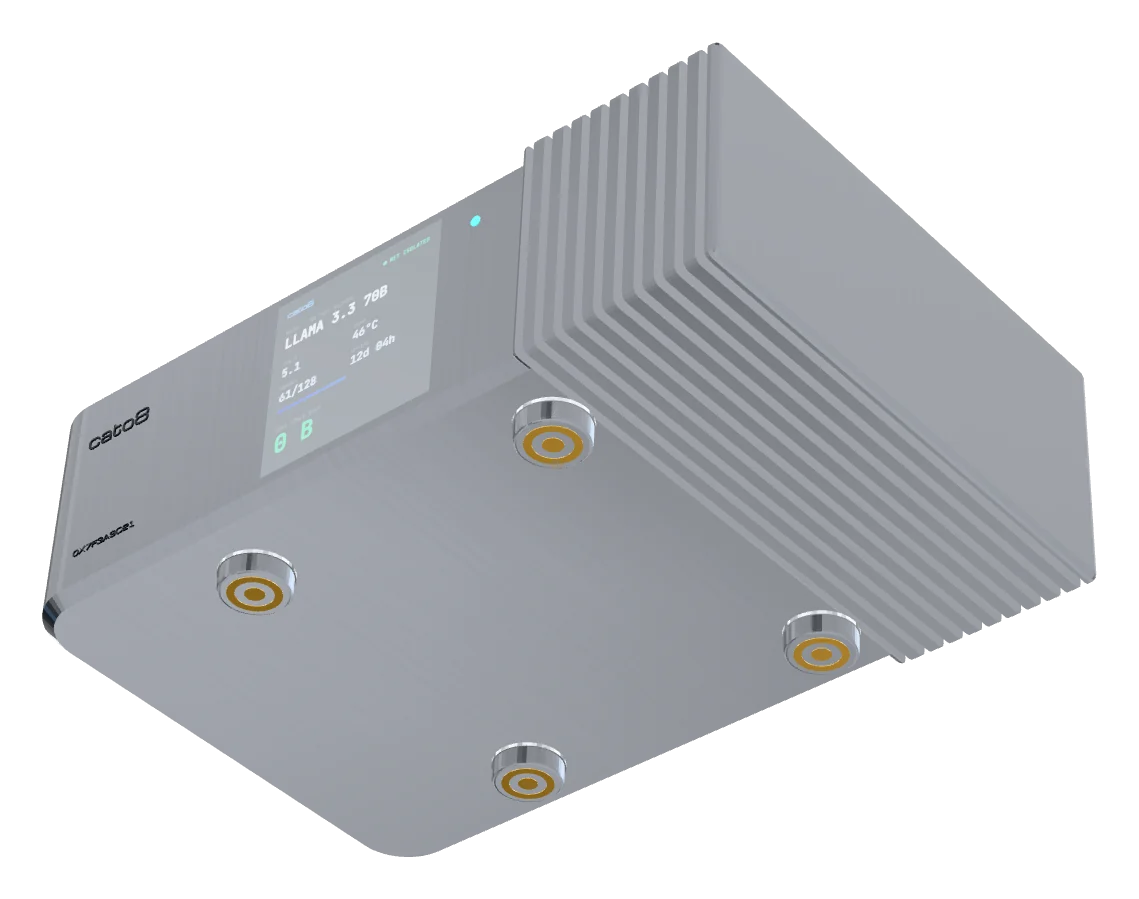
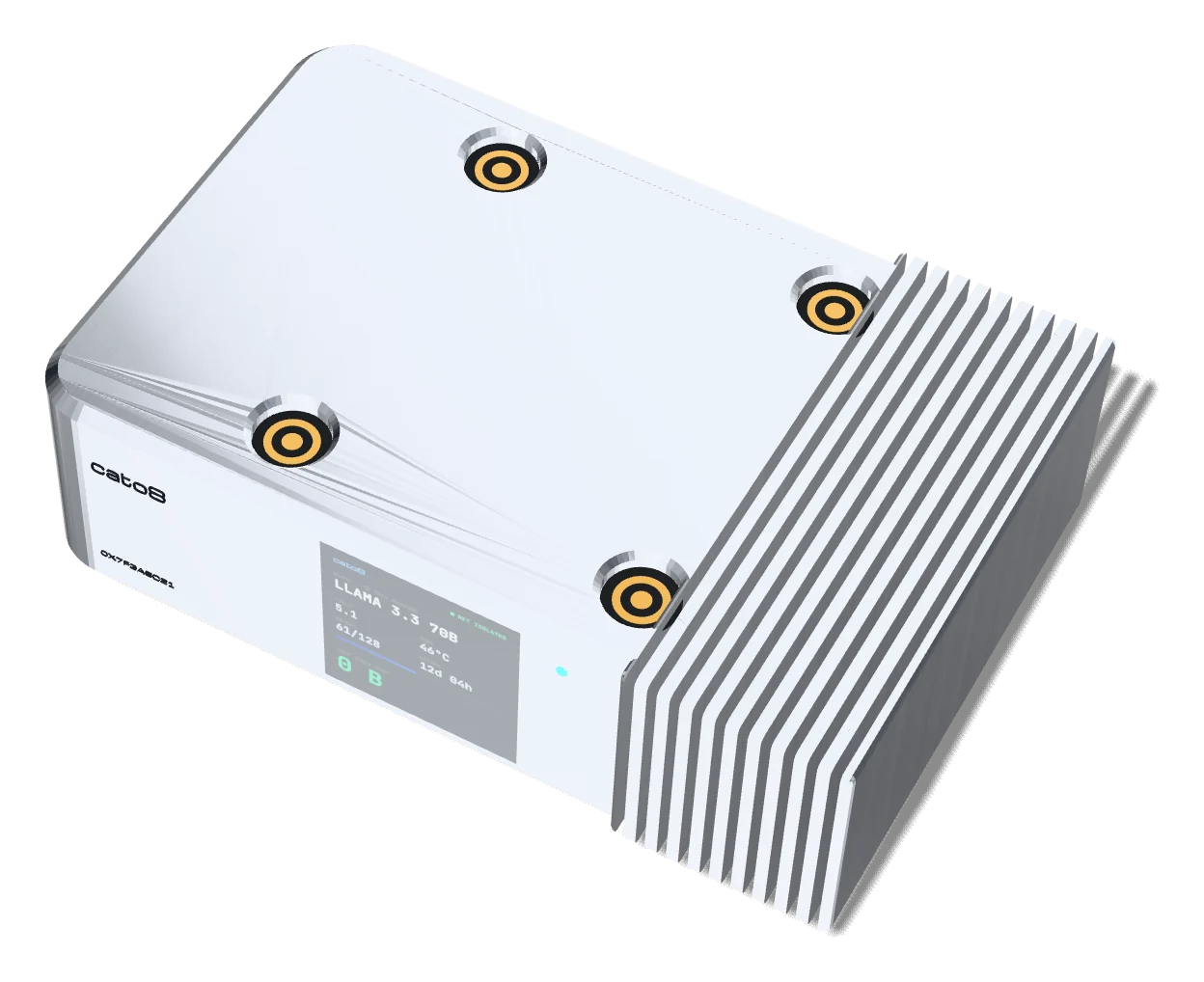
The machine, up close
Satin aluminium or satin black, a fin block cut from solid, every rear port labelled, and gold contacts where one machine stacks onto the next.
Outgrown it
Every machine can be linked to another. Two units pool their memory into one larger space, so a model that fits on neither will run across both. You are never buying the ceiling on day one, and you are never throwing the first machine away to get past it.
Memory is the hard wall in local AI. Pool two Professional machines and you have 256 GB, which opens up models that simply will not load on 128 GB. This is the main reason to stack.
Run them as two independent nodes instead and each serves its own users at full speed. For a growing team this is the genuine doubling, and it is usually what people actually need.
We would rather say this up front. When a single model is split across two machines, the link between them carries a fraction of what internal memory does, so the pair generates at roughly the speed of one. You gain capacity and headroom, not raw speed on a single query. Anyone promising you double throughput is selling.
Model compatibility
Named models, 4-bit, with approximate generation speed. No asterisks: if it says it runs, it runs, and where it will not fit we say so.
| Model | Personal64 GB | Professional128 GB | Two stacked256 GB | Enterprise512 GB+ |
|---|---|---|---|---|
| Llama 3.1 8B8B · ~5 GB | ~35 tok/s | ~40 tok/s | ~40 tok/s | ~40 tok/s |
| Qwen3 32B32B · ~19 GB | ~10 tok/s | ~11 tok/s | ~11 tok/s | ~12 tok/s |
| Llama 3.3 70B70B · ~40 GB | Will not fit | ~5 tok/s | ~5 tok/s | ~6 tok/s |
| gpt-oss-120b117B mixture of experts · ~65 GB | Will not fit | ~40 tok/s | ~40 tok/s | ~45 tok/s |
| Qwen3 235B235B mixture of experts · ~120 GB | Will not fit | Very tight | ~10 tok/s | ~14 tok/s |
| DeepSeek-R1 671B671B mixture of experts · 350 GB+ | Will not fit | Will not fit | Needs four | ~12 tok/s |
Mixture-of-experts models are large on disk but activate only a fraction of themselves per token, which is why the 120B runs so much faster than the 70B. Long context costs memory on top: budget roughly a quarter of the model again for everyday work, and closer to double if you intend to work at 128k tokens.
AI Packs
A pack is a working configuration, models, applications and settings chosen for a job, installed before the machine leaves us.
Assistant, private documents, voice, knowledge base.
Coding models, local APIs, model management.
Image generation, audio, video, creative tools.
Company knowledge, document intelligence, automation.
Multi-user, access control, monitoring, integrations.
SetupMyAI
SetupMyAI is our deployment arm. Engineers come to your office, install the machine, connect it to your systems, train your team and stay until it works, on-site across the UK and UAE, remotely anywhere else in the world.
Where this goes
Compute today is concentrated in a handful of data centres. We think it should be distributed across the people who own it. Machines already cooperate on a local network; the protocol that lets them cooperate more widely is being built in the open.
A single machine, yours, running locally.
Several machines in one office, pooled into one larger model.
Federated compute between independently owned nodes.
We're not selling this. It is not a return on your hardware. It's the direction we're building in, and we'd rather say so plainly.
No. The models run on the machine itself, so there is no cloud inference to fall back to, not even for large models. A physical NET switch on the back disconnects the network entirely, and the machine keeps working with the cable unplugged. No account is needed to use it.
Atrium (64 GB) runs 30B-class models such as Qwen3 32B comfortably. Forum (128 GB) runs Llama 3.3 70B and the 120B mixture-of-experts gpt-oss-120b. Curia pools 256 GB and runs Qwen3 235B; Senate pools 512 GB and runs DeepSeek-R1 671B. Models come pre-installed on the drive.
Atrium, for one person, starts at £1,500 on AMD. The business machines run on NVIDIA GB10 Grace Blackwell at £4,199 per machine: Forum (one machine, £4,199), Curia (two, £8,398) and Senate (four, £16,796), with an AMD option that costs less. Memory, storage, wireless and cover can all be configured, Apple-style, at /buy. Prices exclude VAT and include installation by a SetupMyAI engineer. UK orders add 20% VAT; orders delivered outside the UK are zero-rated. Enterprise is a custom quote.
No. There is no subscription, activation charge or setup fee needed to use the machine. Running it harder costs nothing beyond electricity.
A £250 deposit reserves your place. It is fully refundable at any time before your machine ships, for any reason. Your price is fixed when you preorder, and nothing else is charged until the machine is ready to ship. We have not committed to a shipping date and will tell you directly when we have one we believe in.
Yes. Forum, Curia and Senate run on NVIDIA GB10 Grace Blackwell as standard: 128 GB of unified memory per machine, full CUDA, and much faster on long documents. Atrium runs on AMD Ryzen AI Max+ to keep it affordable, and can be specified with NVIDIA. RTX PRO Blackwell builds are available for Enterprise. The operating system, pre-installed models, NET switch and installation are the same on every build.
A SetupMyAI engineer, included in the price. Installation is on-site across the UK and UAE and remote everywhere else. They connect it to your files and systems and train your team.
No. Stacking pools memory, so two units can run models that neither could load alone, and two units run as separate nodes can serve twice as many people at full speed. A single answer from one model split across two machines generates at roughly the speed of one unit.
It keeps working. Models are on the drive, the weights are open, the operating system does not check a licence and nothing phones home. If we cancel the product or stop trading before your machine ships, deposits are refunded.
A one year limited warranty against defects in materials and workmanship, from delivery. It is in addition to your statutory rights, which in the UK run for up to six years under the Consumer Rights Act 2015 and are not limited by the warranty.
A chat subscription costs tens of pounds a month. Running agents that read documents all day, write code and answer from your own files is metered on tokens, and the bill lands in the thousands.
Cloud, per month
£1,250–£4,900
every month, indefinitely
Owned, once
£0
every month, thereafter
Covered in 2–5 months at these rates.
Assumes £45–£90 per seat, £80–£400 of agent usage per person, and one Professional per five people.
Illustrative, and it depends entirely on what you run. These figures assume a small team running agents rather than occasionally chatting: at published frontier-model API rates, one always-on document workflow costs several hundred pounds a month, and a coding assistant driven all day by a single developer can exceed that on its own. If your usage really is a few questions a day, the cloud is cheaper and we'll tell you so.